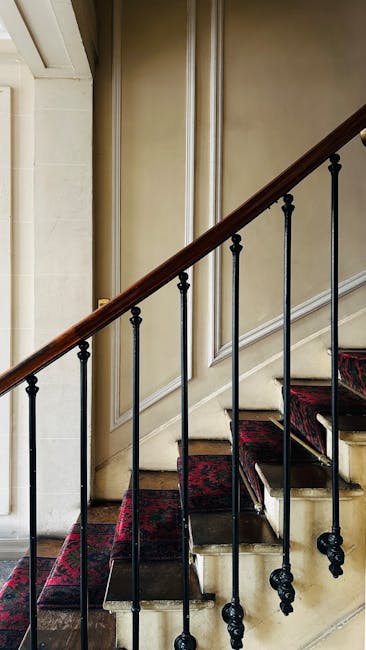
Apartment Moves: Navigating Staircases and Service Lifts Safely
Apartment moves can look simple on paper and then get complicated the moment you meet a narrow landing, a sharp turn, or a service lift with a weight limit you did not expect. If you are moving furniture, boxes, appliances, or an entire flat, the route matters as much as the load itself. Apartment Moves: Navigating Staircases and Service Lifts Safely is really about one thing: getting everything from point A to point B without damaging the building, injuring anyone, or turning moving day into a slow-motion queue in the hallway.
That is why a good apartment move is planned around access, timing, communication, and the right equipment. The difference between a smooth move and a stressful one is often a few practical decisions made before the first box is lifted. In this guide, you will learn how staircases and service lifts work during apartment moves, how to reduce risk, what to ask building management, and how to choose the safest method for your situation.
If you are comparing professional help, it can also be useful to review a provider's approach to home moves, man and van services, or packing and unpacking services before moving day arrives.
Table of Contents
- Why apartment moves matter when stairs and lifts are involved
- How safe stair and service lift moves work
- Key benefits and practical advantages
- Who this is for and when it makes sense
- Step-by-step guidance
- Expert tips for better results
- Common mistakes to avoid
- Tools, resources and recommendations
- Law, compliance, standards and best practice
- Options, methods, and comparison table
- Case study or real-world example
- Practical checklist
- Conclusion
- Frequently asked questions
Why Apartment Moves: Navigating Staircases and Service Lifts Safely Matters
Apartment buildings add a layer of complexity that detached-house moves often do not have. Staircases may be tight, winding, or shared with neighbours. Service lifts may be available only at certain times, may need a passcode or key, and may have strict capacity limits. You may also be dealing with concierge rules, parking restrictions, fragile wall finishes, or residents trying to get to work while your sofa is halfway through the lobby. Not exactly ideal.
Safety matters for more than one reason. First, people can be injured by slips, awkward lifting, or poor coordination on stairs. Second, the building itself can be damaged by scuffed walls, broken banisters, dented lift panels, or chipped flooring. Third, a poor plan costs time. One slow load through a staircase can disrupt the whole schedule, especially if the service lift becomes unavailable and the team has to switch to stairs halfway through.
The safest apartment move is not always the fastest-looking option. Sometimes the right answer is to dismantle large items, use smaller loads, or wait for a lift slot instead of forcing an oversized item through a risky route. A little patience usually beats a repair bill.
Expert summary: The safest apartment moves are built around route planning, controlled lifting, the right protective materials, and clear coordination with building staff.
How Apartment Moves: Navigating Staircases and Service Lifts Safely Works
Safe apartment moving starts before anything is carried. The process usually begins with a route assessment: measuring doorways, stairwells, landings, lift dimensions, ceiling heights, and any bends or obstructions that could affect movement. That sounds basic, but it is the sort of step people often skip until they find themselves trying to turn a wardrobe on a landing that was never designed for wardrobes.
From there, the move is usually broken into manageable stages:
- Pre-move inspection: Check the route from the apartment to the vehicle, including internal corridors, staircases, lift access, external steps, and parking distance.
- Item planning: Separate large, awkward, or fragile items from lighter boxes so the right handling method can be used for each.
- Protection setup: Use floor coverings, corner guards, padded blankets, and lift protection where appropriate.
- Load sequencing: Move heavier or bulkier items in a controlled order so routes stay clear and the team does not block access points for too long.
- Communication: Agree who is guiding, who is lifting, who is monitoring the lift, and who is checking for hazards.
- Final check: Confirm nothing has been left behind, the route is clean, and any building protection can be removed safely.
Service lifts can be a great help, but only if used correctly. Unlike passenger lifts, they often have different rules. Some buildings require you to pad the interior, book time slots, or assign someone to hold the doors and manage the control panel. If the lift is small, do not assume "it will fit if we angle it a bit." Sometimes it will, sometimes it will not, and you only want to discover that once.
Staircase moves are more physical and need more control. The team should maintain clear footing, avoid overloading one person, and keep vision clear at corners. One person should lead the object verbally if visibility is limited. On a staircase, that coordination is often the real safety feature.
Key Benefits and Practical Advantages
When staircases and service lifts are managed well, the whole move becomes calmer. The benefits are not just about avoiding damage; they are also about reducing friction between everyone involved.
- Lower risk of injury: Better lifting technique, fewer rushed turns, and fewer awkward carries reduce strain and slips.
- Less damage to property: Protecting walls, floors, and lift interiors helps avoid expensive repair issues.
- Faster overall flow: A planned route is usually quicker than improvised carrying.
- Less stress for residents and neighbours: Clear timing and tidier access keep disruption down.
- Better handling of fragile items: Controlled movement means less jolting and fewer accidental knocks.
- More predictable moving day: You know where things are going, what equipment is needed, and where the bottlenecks may appear.
There is also a financial advantage. Damage claims, extended labour time, and missed lift bookings can all add avoidable cost. For many households, the cheapest move is the one that does not need to be repeated or repaired.
If you are comparing service levels, it may help to review a company's insurance and safety approach and their health and safety policy before confirming the booking.
Who This Is For and When It Makes Sense
This approach matters for anyone moving into or out of an apartment, especially if the building has limited access. It is particularly relevant for:
- people moving from upper-floor flats without direct ground-level access
- renters or homeowners in apartment blocks with shared lifts
- families with large furniture, prams, cots, or bulky appliances
- older adults moving into smaller accommodation
- landlords, letting agents, and property managers coordinating turnover
- people planning a full flat move with professional help
- anyone moving at peak times when lift availability is tight
It also makes sense if you are moving under time pressure. For example, if you have a narrow window between tenancy handover and vehicle access, you need a route that works first time. The same is true if you are moving a sofa bed, a refrigerator, or a bed frame that can be dismantled but not easily carried intact.
Truth be told, if the first thing you hear on move day is "that lift is out of service," your plan suddenly needs to be more flexible than you hoped. Good preparation helps with that.
Step-by-Step Guidance
1. Measure the route before moving day
Do not guess. Measure door widths, lift internal dimensions, stair widths, landing space, and the length of long items such as mattresses, wardrobes, or sofas. Also check ceiling height if you expect to tilt items. A few centimetres can make a big difference in apartment buildings.
2. Confirm building rules and access times
Ask the building manager, concierge, or landlord about lift booking rules, moving hours, protective requirements, parking permits, and any restrictions on weekend or evening moves. Some buildings require prior notice for lift use. Others may reserve service lift access for deliveries or maintenance only. It is better to know that before the van arrives.
3. Decide what should be dismantled
Large items often move more safely when partly dismantled. Beds, tables, shelving, and some wardrobes can usually be broken down into more manageable sections. Keep screws, brackets, and small fittings in labelled bags. A small bag taped to the item or stored in a dedicated box saves a lot of time later.
4. Protect the route
Use floor runners, blankets, or cardboard where suitable. Protect door frames, lift walls, and corners if you expect contact. In many apartment blocks, most damage happens at turning points rather than on straight runs. That is where people overcorrect, bump, and swear quietly under their breath.
5. Assign clear roles
Every move goes better when people know who is doing what. One person should direct the route. Another should check clearances. If a service lift is used, someone should monitor the doors and keep the cabin clear. If stairs are used, one person should lead from the upper or lower end depending on the item and visibility.
6. Move one item at a time through difficult points
Do not try to carry two awkward items at once through a tight stairwell. This is how knocks happen. On narrow staircases, slower usually means safer, and safer is usually faster in the end because you avoid backtracking.
7. Keep the lift clear and within safe capacity
Service lifts should never be treated like a storage room. Follow the building's rules and avoid overloading the cab. If the item is large but light, it may still be awkward to manoeuvre. Weight is not the only issue; shape matters just as much.
8. Check the item and route at the other end
Before unloading, make sure the destination room is ready. Clear the path, open doors if needed, and identify the safest place to set heavy items down. A prepared landing zone prevents rushed decisions at the moment everyone is tired.
Expert Tips for Better Results
Small improvements make a big difference in apartment moves. Here are the habits that tend to separate smooth jobs from messy ones.
- Use the service lift early in the day if possible: Shared access is often easier before the building gets busy.
- Wrap sharp corners before carrying: Edges on furniture can damage walls even when the item itself is light.
- Wear proper footwear: Grip matters on polished steps and in lift lobbies.
- Keep boxes balanced: A box that feels fine on level ground can become awkward on stairs.
- Label fragile and priority items clearly: You want essential items to be easy to identify when the move gets busy.
- Think in routes, not rooms: It helps to ask, "How does this item exit the building?" before asking where it will go inside.
A useful real-world habit is to do a five-minute "route walk" just before moving starts. Walk from the apartment to the vehicle and back again, looking for loose mats, door stops, narrow corners, or anything that could snag a wheel or boot. It is a small step that often prevents a bigger problem.
If you need a team with a reliable moving setup, services such as moving truck hire or a flexible man with van service can help match the vehicle and labour to the building access you actually have, not the access you wish you had.
Common Mistakes to Avoid
Most apartment moving problems are predictable. The issue is usually not bad luck; it is a missed check, a rushed carry, or an assumption that the lift will solve everything.
- Not measuring large items: The wardrobe that fits in your current bedroom may not fit around the landing corner.
- Ignoring lift booking rules: Service lifts are often shared and may require advance notice.
- Overpacking boxes: Heavy boxes are difficult on stairs and dangerous if they shift.
- Skipping protection: One short lift ride can still leave scuffs if the interior is unprotected.
- Trying to force awkward furniture through: This is how damage and frustration build fast.
- Leaving the vehicle too far away: Extra carrying distance multiplies fatigue and the chance of a mishap.
- Forgetting the exit path: A plan that only works inside the apartment is not a complete plan.
One of the most common errors is assuming stair safety is just about "being careful." Care is necessary, but the real protection comes from planning load size, controlling pace, and having a clear route. Care without structure is just optimism with a box in your hands.
Tools, Resources and Recommendations
The right tools do not make a move effortless, but they make it safer and more controlled. For apartment work, the essentials are usually straightforward.
| Tool or resource | Why it helps | Best used for |
|---|---|---|
| Furniture blankets | Protects surfaces and reduces impact | Sofas, tables, appliances |
| Corner guards | Prevents chips and scuffs on walls | Corridors, landings, lift entrances |
| Moving straps | Improves grip and balance | Heavy or awkward items on stairs |
| Dollies or sack trucks | Reduces manual carrying distance | Boxes, small appliances, stacked items |
| Labelled bags for fittings | Keeps dismantled parts together | Beds, shelving, flat-pack furniture |
| Lift booking confirmation | Helps avoid access conflicts | Any building with shared lift control |
You may also want to look at practical service support before moving day. For larger or more complex moves, a provider's removal truck hire options, or support from house removalists, can give you a more structured process than trying to coordinate everything yourself.
And if the move involves clearing out items you no longer want, a service with a strong recycling and sustainability focus is worth considering. Less clutter usually means less lifting, less congestion, and fewer route problems.
Law, Compliance, Standards and Best Practice
Apartment moves often sit within a mix of building rules, landlord requirements, and general health and safety expectations. The exact obligations vary depending on the property and the service being provided, so it is wise to treat building instructions seriously and confirm details in advance.
In practical terms, best practice usually includes:
- following booking rules for lifts and loading bays
- protecting walls, floors, and lift interiors where requested or appropriate
- using suitable manual handling techniques
- keeping walkways clear and avoiding blocked fire routes
- making sure access arrangements are understood by everyone involved
- checking insurance cover if professional movers are handling the job
Manual handling deserves special attention. Heavy or awkward items should be moved by enough people, with the route assessed first. If something is too heavy, too large, or too unstable to carry safely, the correct response is to change the method, not to "have a go" and hope for the best.
For trust and reassurance, it is sensible to review a company's documented policies, especially if you are hiring help. Pages such as insurance and safety, health and safety policy, and about us can give useful context on how the business operates and how seriously it takes risk management.
Options, Methods, or Comparison Table
There is no single best method for every apartment move. The safest choice depends on item size, building layout, lift availability, and the amount of help on hand. Here is a simple comparison to help you decide.
| Method | Best for | Strengths | Limitations |
|---|---|---|---|
| Staircase carry | Small to medium items, limited lift access | Flexible, no lift booking required | More physical effort, higher fatigue risk |
| Service lift use | Bulky furniture, multiple boxes, managed access | Less stair strain, easier on the body | Requires booking, size and weight restrictions |
| Mixed method | Most flat moves | Balances speed and safety | Needs good coordination |
| Dismantle and reassemble | Large furniture in tight buildings | Improves fit through tight spaces | Takes time and organisation |
For most apartment moves, the mixed method wins. Use the lift for what fits, use stairs for lighter items, and dismantle the awkward pieces that would otherwise create a bottleneck. It is less glamorous than brute force, but much kinder to your back and the building.
Case Study or Real-World Example
Consider a typical two-bedroom flat on the fourth floor of a city block. The apartment has a service lift, but it is narrow and must be booked in hourly blocks. The move includes a bed frame, mattress, two bookshelves, a dining table, a sofa, and around 30 boxes.
The safest plan would likely look like this:
- measure the sofa and table before move day
- dismantle the bed frame and remove shelf contents in advance
- book the lift for the heaviest loading window
- protect the lift interior and hallway corners
- send lighter boxes down in stacked runs while the lift is free
- carry only what is practical on the stairs
- check the route before moving the sofa, since that is often the item that causes the first delay
In a move like this, the sofa may determine the whole sequence. If it fits through the lift, the rest of the move becomes much easier. If it does not, you need a second plan before anyone starts lifting. That is the difference between a calm move and a hallway debate.
For people who want a professional team to coordinate the difficult parts, home moves support combined with the right vehicle and access planning can reduce the number of decisions you have to make on the day.
Practical Checklist
Use this checklist before the move starts. It is simple, but it catches many of the problems that cause delays.
- Measure large furniture and appliances
- Confirm staircase width, landings, and lift dimensions
- Check lift booking rules and permitted moving hours
- Reserve parking or loading space if needed
- Protect floors, corners, and lift interiors
- Dismantle furniture where practical
- Label boxes by room and priority
- Keep tools, screws, and fittings in one marked container
- Assign a person to guide the route
- Wear sensible shoes with grip
- Keep staircases and shared spaces clear
- Plan the unloading order at the destination
- Confirm insurance and service details with the provider
- Have a backup plan if the lift is unavailable
Quick reminder: if something feels unsafe to lift, carry, or angle through a landing, stop and reassess. A pause is cheaper than a repair.
Conclusion
Apartment moves are rarely difficult because of one giant problem. They become difficult because of lots of small ones: a narrow staircase, a lift booking you forgot to confirm, a sofa that is just a bit too long, or a hallway that does not forgive sloppy carrying. Once you account for the route, the move becomes far more manageable.
The safest approach is usually the most organised one. Measure first. Protect the building. Use the service lift properly when available. Break down bulky items. Keep communication clear. And if the job feels too awkward to handle alone, bring in help that is set up for apartment access rather than general guesswork.
If you are planning a flat move and want help choosing the right service, compare options, ask about access handling, and check the provider's safety information before you book. A few minutes of preparation can save a lot of hassle on moving day.
Get a free quote today and see how much you can save.
For a straightforward next step, visit the team's contact page or review pricing and quotes to plan your move with clearer expectations.
Frequently Asked Questions
What is the safest way to move furniture down apartment stairs?
The safest way is to measure the item first, clear the route, use two or more people for awkward pieces, and move slowly with one person guiding. Large furniture should often be dismantled if there is any doubt about the turns or landings.
When should I use a service lift instead of the stairs?
Use the service lift when the item fits comfortably, the building allows it, and you can protect the lift interior as required. It is usually the better choice for heavy boxes and bulkier items, provided the lift's size and capacity are suitable.
Do I need to book the lift before moving day?
In many apartment buildings, yes. Some service lifts must be reserved in advance, and some buildings limit moving hours. Always check with the building manager, concierge, or landlord before the move.
How do I know if my sofa will fit through the staircase?
Measure the sofa's full length, width, and depth, then compare those numbers with the narrowest part of the route, including turns and landings. If the sofa has removable feet or can be tilted safely, that may help, but do not rely on guesswork.
What should I do if the service lift is out of order?
Pause and reassess the move rather than forcing a risky carry. You may need to split the load, dismantle larger items, use the staircase carefully, or reschedule the heaviest pieces until access is restored.
How can I protect the building during an apartment move?
Use floor runners, padding, and corner protection where appropriate, and keep all walkways clear. The most common damage points are door frames, corners, and lift interiors, so those should be protected first.
Are stair movers or removal teams better for apartment moves?
It depends on the building and the items being moved. A skilled removal team is often better when access is tight, large furniture needs dismantling, or lift coordination is required. The key is experience with apartment access, not just general lifting ability.
What items are most difficult to move in flats?
Wardrobes, sofas, mattresses, washing machines, fridge-freezers, and large tables usually cause the most trouble. These items are awkward in stairwells because of their size, weight, or shape.
How far in advance should I plan an apartment move?
As early as possible, especially if you need lift bookings, parking permissions, or help with dismantling furniture. Even a simple flat move benefits from planning a few days ahead, while more complex ones deserve longer lead time.
What should I ask a moving company about apartment access?
Ask whether they have handled stair and lift access before, what equipment they bring, whether they can dismantle furniture, how they protect walls and floors, and what they need from the building in advance.
Is it worth using packing services for an apartment move?
Yes, if you want to reduce the number of loose items, speed up loading, and keep fragile items better organised. Packing support can also make staircase and lift handling easier because boxes are more consistently sized and easier to stack.
How do I avoid upsetting neighbours during a flat move?
Keep noise controlled, avoid blocking shared corridors, and stick to approved moving times. A quick courtesy note or a calm conversation with neighbours can also help if the move is likely to be busy or lengthy.
For more details on company policies, trust information, or service arrangements, you can also review the provider's about us page, terms and conditions, and insurance and safety guidance before booking.