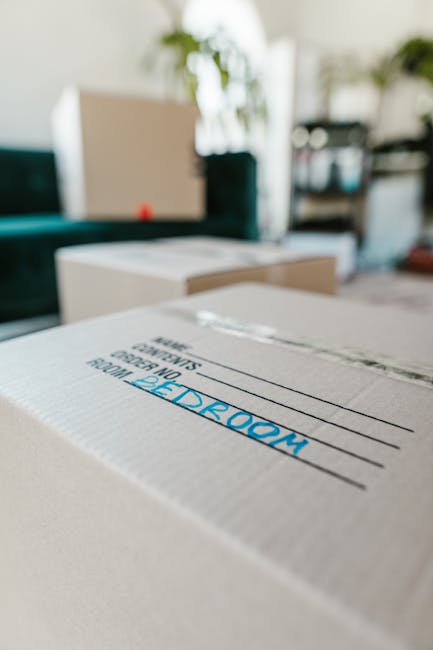
Pack and label like a pro for stress free UK removals
Moving house in the UK has a way of turning ordinary life upside down. One minute you are looking for the kettle, the next you are staring at a mountain of boxes wondering which one contains the bedding, the charger, or the missing screws from the bed frame. If you want to pack and label like a pro for stress free UK removals, the answer is not to pack faster. It is to pack smarter, label clearly, and make every box do a job.
Done properly, packing becomes less of a weekend panic and more of a calm system. That means fewer damaged items, fewer "where on earth is it?" moments, and a much easier unloading day. This guide walks you through the practical side of packing and labelling for a home move, with the kind of detail that genuinely helps on moving day. No fluff, no fake magic. Just a better way to get from A to B without losing your mind.
For some moves, professional support makes the whole thing easier, especially if you are short on time or juggling work, children, or an awkward staircase. Services such as home moves and packing and unpacking services can take a lot of pressure off the day. But even if you are doing most of it yourself, the principles below will still save you time, cardboard, and a fair bit of swearing.
Table of Contents
- Why packing and labelling well matters
- How the system works in practice
- Key benefits and practical advantages
- Who this is for and when it makes sense
- Step-by-step guidance
- Expert tips for better results
- Common mistakes to avoid
- Tools, resources and recommendations
- Law, compliance, standards, and best practice
- Options, methods, and comparison table
- Case study or real-world example
- Practical checklist
- Conclusion
- Frequently asked questions
Why Pack and label like a pro for stress free UK removals Matters
Packing is not just about getting possessions into boxes. It is about control. When things are clearly grouped, protected, and labelled, the removals team can load efficiently, you can find essentials quickly, and the unpacking process becomes far less chaotic. That matters whether you are moving from a flat in South London, a terrace in Leeds, or a family home in Surrey.
Let's face it: most moving stress does not come from the lifting. It comes from uncertainty. Which box has the cutlery? Which room should this go in? Where are the documents? A good labelling system removes that uncertainty before it starts. And once the removals van pulls up outside and the day gets noisy, with doorbells, tape, and footsteps on the stairs, you will be glad you took the time.
There is also a practical safety angle. Overpacked boxes split. Underlabelled boxes get stacked badly. Fragile items move around and break. People lift the wrong thing with the wrong grip. If you want a smoother move, the smallest details often matter the most.
In our experience, the best moves are rarely the fanciest ones. They are the organised ones. A clear label on the box. A sensible weight limit. A room plan. That sort of thing. Nothing glamorous, but it works.
How Pack and label like a pro for stress free UK removals Works
The method is simple enough, though it does need discipline. You sort belongings by room or category, pack them with suitable protection, and label each box so that everyone knows what it is, where it belongs, and whether it needs extra care. That means your boxes are not just containers; they become instructions.
A strong packing system usually works in three layers:
- Category - what type of items are inside, such as kitchenware, books, or linens.
- Destination - which room the box should go into at the new property.
- Priority - whether the box should be opened immediately or can wait until later.
That simple structure makes a huge difference. For example, a box labelled "Kitchen - everyday crockery - open first" gives a mover useful direction and gives you a calm first evening. A box marked only "miscellaneous" gives nobody anything. And yes, "miscellaneous" tends to become the black hole of moving home.
Some households also use colour-coding. It is especially helpful if several people are unpacking, or if a removals team needs a visual cue from a distance. Red for kitchen, blue for bedroom, green for bathroom. The exact colours do not matter; consistency does. If you use colour on one box and text on another, the system gets messy very quickly. A little bit annoying, frankly.
Key Benefits and Practical Advantages
When packing and labelling are done properly, the benefits show up almost immediately. Some are obvious, others only become clear halfway through the move when everyone else is looking for a screwdriver and you already know which box has it.
- Faster unloading - boxes can go straight into the correct room.
- Less breakage - fragile items are easier to identify and handle correctly.
- Quicker unpacking - essential items are easy to find.
- Lower stress - fewer decisions need to be made in the middle of a busy day.
- Better use of removals labour - movers spend less time asking questions and more time moving.
- Improved safety - heavy or awkward boxes are easier to spot and manage.
There is also a small but real emotional benefit. A well-labelled move feels manageable. You can see progress. One packed room at a time, one labelled stack at a time, the job starts to look achievable. That matters more than people admit.
If you are working to a budget, good packing also protects your wallet. Fewer damaged goods, fewer emergency purchases, fewer "we need another box of tape" runs to the shop. And if you are comparing service options, it can help to think about whether a basic man and van service, a larger moving truck, or a full packing option will suit your move best.
Who This Is For and When It Makes Sense
This approach is useful for almost anyone moving home, but it is especially valuable if your move involves a lot of rooms, children's belongings, awkward access, or a tight timetable. Families tend to benefit because children's items, school things, toys, and bedtime essentials can be separated cleanly. That makes the first night less frantic. Far less.
It also makes sense for renters moving out of flats where access time is limited, or where stairwells and parking restrictions mean movers need to work efficiently. If the van is parked on a busy street, or if your building has a narrow hallway and a lift that seems to have its own opinions, clear labelling helps keep the day moving.
Older homeowners downsizing often find this method especially useful because it helps distinguish between what is being kept, gifted, recycled, or disposed of. In that case, services such as furniture pick up can be useful for unwanted items that should not be carried from one home to another.
It is also a very good fit if you are moving between rented properties and need to prioritise speed. If you know you will be unpacking in phases, your labels should reflect that. No point pretending every box deserves the same attention. Some do. Some really do not.
Step-by-Step Guidance
Here is a practical process you can follow without turning your house into a packing warehouse.
- Start with a room plan. List each room in the new property, then decide which belongings belong where. If you are unsure, group by function first and room second.
- Set up packing stations. Keep boxes, tape, marker pens, labels, and wrapping material in one place. If everything is scattered, you will waste time hunting for a roll of tape with one inch left on it.
- Pack non-essentials first. Books, spare bedding, decorative items, out-of-season clothes, and extra kitchen gadgets can usually go early.
- Protect fragile items properly. Wrap glass, ceramics, and lamps carefully. Fill empty space so items do not rattle. A box that sounds like maracas is not a good sign.
- Keep weight under control. Heavy items belong in smaller boxes. Books in a huge box are a classic mistake and, to be honest, a sore-back waiting to happen.
- Label on at least two sides. One label may be hidden when the box is stacked. Two sides is safer.
- Include room, contents, and priority. For example: "Bedroom 2 - winter clothes - open later."
- Mark fragile or awkward items clearly. Use plain words, not cryptic notes that only make sense to you.
- Create an essentials box. Put in phone chargers, toiletries, toilet roll, kettle items, snacks, medication, basic tools, and a change of clothes.
- Keep critical documents separate. Passports, tenancy papers, deeds, warranties, and key contact details should not disappear into a random box.
One useful extra step is to number your boxes. For example, "Kitchen 1 of 8", "Kitchen 2 of 8", and so on. That way, if one box goes missing or gets delayed, you know exactly what is absent. Small thing, big calm.
Expert Tips for Better Results
First, label before you tape the box fully shut. It sounds obvious, but moving day has a habit of making obvious things disappear. Once the lid is sealed, write the label immediately, not later. Later turns into never.
Second, avoid vague labels like "misc" or "stuff." They feel convenient in the moment, but they create confusion on arrival. If something does not fit neatly into a category, describe what it actually is: "laundry supplies", "guest bedding", "kitchen electrics", "study papers". Specific is better.
Third, use a packing list alongside the box label. The label should be short and visible; the packing list can hold finer detail. For example, one box might say "Hallway - tools and fixings", while your list notes the drill bits, screws, spare bulbs, and picture hooks inside. That is a very tidy system, and it helps later.
Fourth, pack your first-night items separately and make them easy to identify. A bright label, a different tape colour, or a larger marker can help. You want that box to be found in seconds, not after an hour of opening the wrong carton and finding Christmas decorations.
Fifth, if you are using a removals company, tell them about any heavy or awkward boxes before the day begins. That includes boxes of books, large mirrors, TVs, and anything fragile or odd-shaped. Good communication prevents rushed handling and awkward surprises on the doorstep.
If you need help with the physical side of the move, a service such as house removalists can be a good fit for bigger domestic moves, while removal truck hire may suit a more self-managed approach. Different jobs, different tools. Simple as that.
Common Mistakes to Avoid
Most packing mistakes are not dramatic. They are small, repeated, and irritating. Which is why they matter so much.
- Packing too early without a system - boxes pile up and nobody remembers what is inside them.
- Using weak boxes - old, damp, or crushed boxes are a false economy.
- Overfilling boxes - if a box bulges, it is harder to stack and easier to split.
- Underlabelling - "kitchen" alone is not enough if the box contains breakables, chargers, and knives.
- Leaving essentials buried - first-night items should never disappear into the van.
- Mixing rooms carelessly - a box containing bathroom and office items slows everything down later.
- Forgetting about access and timing - if movers need to load quickly, bad organisation will show up fast.
Another common issue is overthinking every single item. You do not need to create an archive system for six mugs and a fruit bowl. The goal is practical order, not perfection. Aim for useful, not museum-grade.
And yes, there is a point where "I'll sort it later" becomes the enemy of a calm move. Everyone says it. Nobody means to. Then moving day arrives and suddenly later has become today.
Tools, Resources and Recommendations
You do not need specialist gear, but a few good basics make a big difference:
- Strong cardboard boxes in mixed sizes for different item weights.
- Packing tape with a proper dispenser if possible.
- Permanent marker pens that write clearly on cardboard.
- Colour stickers or tape for room coding.
- Bubble wrap, paper, or soft linens for fragile items.
- Scissors or a box cutter kept safely away from children.
- Simple inventory sheet on paper or in a notes app.
For property sizes with lots of furniture or mixed contents, it can also help to look at service options before you start. A commercial-style move, for instance, needs a very different approach to a one-bedroom flat. The same company may offer commercial moves for business premises and office relocation services if your move is work-related, which shows how much planning matters when the contents are varied.
If you are trying to reduce waste, think about what can be reused, donated, or recycled before you pack it. The page on recycling and sustainability is a helpful reminder that moving day should not automatically become throwing-day. A lighter move is often a better move.
Law, Compliance, Standards, or Best Practice
For most home moves, there is no special legal rule telling you exactly how to label a box. Still, there are sensible UK best practices that are worth following, especially around safety, handling, and information accuracy. If a removals team is moving your goods, it helps to be clear about anything fragile, dangerous, or unusually heavy. That is not bureaucracy; it is basic care.
If you are packing items that could be hazardous, such as cleaning chemicals, aerosols, batteries, or sharp tools, follow the guidance provided by the item manufacturer and use common sense. Keep these separate from food, bedding, and children's items. If in doubt, ask the removals provider before moving day rather than assuming all goods can be packed together.
For larger or more complex moves, companies typically work to internal health and safety procedures and insurance expectations. It is sensible to understand what your provider covers and what your responsibilities are. If you want to check how a removals business approaches these areas, a page such as insurance and safety can help set expectations before the van turns up.
It is also worth reading the provider's terms carefully, especially on item handling, payment, cancellations, and access conditions. Those details are not glamorous, but they matter if the lift is out, the parking bay is blocked, or the sofa simply will not fit through the door. Life, eh.
Options, Methods, or Comparison Table
There is no single perfect method for every move. Here is a straightforward comparison of common approaches.
| Method | Best for | Pros | Watch-outs |
|---|---|---|---|
| Room-by-room packing | Most home moves | Easy to track, simple to unpack, clear labels | Can become messy if you mix items between rooms |
| Category packing | Smaller homes, renters, shared homes | Good for prioritising items by type | Needs strong labelling to avoid confusion at destination |
| Colour-coded packing | Family homes, busy moves, team unpacking | Very fast visual sorting, especially in a rush | Needs a shared colour key or the system breaks down |
| Hybrid method | Larger or more complex moves | Flexible, accurate, and good for mixed contents | Takes a little more planning up front |
To be fair, the hybrid method is usually the safest bet. Room labels plus a colour cue plus an essentials box. That combination covers most of the common problems without becoming overcomplicated.
Case Study or Real-World Example
A good example is a typical three-bedroom family move. The household had a mix of kitchenware, children's toys, school books, bedding, a home office setup, and several bulky furniture items. In the past, their boxes had been labelled in a very loose way. "Bedroom stuff." "Kitchen bits." "Odds and ends." You can probably guess the result: unpacking took days, and the first evening involved opening box after box just to find the toothbrushes.
This time, they changed the approach. Every box was assigned a room, a short content description, and a priority level. Red stickers marked kitchen and utility boxes. Blue stickers marked bedrooms. A separate tote bag held chargers, toiletries, snacks, medication, and the kettle. A small inventory sheet listed the contents of each box in plain language.
The moving day itself was not glamorous, because moving day never is. There were muddy shoes by the door, a blocked parking space for ten minutes, and one child who was convinced the cat had been packed by mistake. But the unloading process was much smoother. Boxes went straight into the right rooms. The most essential items were found first. By evening, the kitchen had enough in it to function, and that alone changed the mood of the house.
That is the real point. Packing and labelling well does not make removals exciting. It makes them easier. And on a stressful day, easier is everything.
Practical Checklist
Use this as a quick moving-day reference.
- Sort belongings by room or category before packing.
- Pack non-essentials first.
- Use strong boxes in appropriate sizes.
- Wrap fragile items individually.
- Do not overfill heavy boxes.
- Label every box on at least two sides.
- Write room, contents, and priority on each label.
- Use colour coding if it helps your household.
- Set aside an essentials box for the first 24 hours.
- Keep documents, keys, and valuables separate.
- Mark any fragile, heavy, or awkward items clearly.
- Check access, parking, and loading arrangements before the van arrives.
- Recycle or donate items you no longer need.
- Confirm any service details with your removals provider in advance.
Tick each box calmly. No heroics needed.
Get a free quote today and see how much you can save.
Conclusion
If you want a smoother move, start with the part you can control: packing and labelling. Clear systems reduce stress, protect your belongings, and make the whole day feel more orderly. That does not mean every move will be perfect. The van might arrive early, the weather might turn, and someone will almost certainly misplace the tape dispenser for ten minutes. But the more organised your boxes are, the easier it is to cope with those little surprises.
Pack with purpose. Label with care. Keep the essentials close. And remember that the best moving days are not the ones where nothing happens; they are the ones where everything that does happen is easy to handle.
By the end of the day, you want one simple feeling: relief. A proper, quiet, well-earned kind of relief.
Frequently Asked Questions
What is the best way to label boxes for a house move?
The best method is to write the destination room, the main contents, and any priority note such as "open first" or "fragile". If you want even more clarity, add colour coding or box numbers. That gives movers and family members enough information without making labels too long.
Should I label boxes on the top or the side?
Both is best. A label on the side is easy to see when boxes are stacked, while a top label helps when the box is sitting alone. Two-sided labelling reduces confusion, especially on a busy unloading day.
How do I pack fragile items safely?
Wrap each item individually, use cushioning material to fill empty space, and keep fragile boxes reasonably light. Mark the outside clearly and avoid stacking heavy items on top. If a box rattles, it usually needs more padding.
What should go in an essentials box?
Include toiletries, toilet roll, chargers, medication, kettle items, snacks, a change of clothes, basic tools, and important documents. If you have children, add comfort items and bedtime essentials too. That first evening will feel much calmer.
How many boxes should I pack per room?
There is no fixed number. It depends on the size of the room and how much you own. What matters more is keeping each box manageable and clearly labelled. A smaller, clearer box is usually better than one giant box of chaos.
Is colour coding worth it for removals?
Yes, especially for family moves or larger homes. Colour coding gives a quick visual cue and helps boxes get into the right room faster. Just make sure everyone understands the colour key before the move starts.
Can I mix items from different rooms in one box?
You can, but it is rarely a good idea. Mixed-room boxes are harder to unpack and easy to misplace. If you absolutely must combine items, keep the categories closely related and label the box very clearly.
What kind of boxes are best for moving?
Strong cardboard boxes in a few different sizes are usually the most practical choice. Smaller boxes are best for heavy items like books, while larger boxes suit lighter but bulky things such as bedding or cushions. Weak or reused boxes can fail at the worst time.
Should I number my boxes?
Yes, if you want better tracking. Numbering helps you check that everything arrived and makes it easier to identify missing items. It is especially useful if you have a lot of similar-looking boxes.
How early should I start packing before moving day?
As early as you reasonably can, starting with non-essential items. For many households, two to four weeks ahead is a comfortable window, though larger or busier homes may need longer. The important thing is steady progress, not a panic-packed last weekend.
Do I need professional packing services?
Not always. If you have time, energy, and a fairly simple move, you may be able to handle it yourself. But if the move is large, time-sensitive, or physically demanding, professional help can save stress and reduce the chance of breakage. It is worth comparing options carefully.
How can I make moving day less stressful overall?
Keep your packing system simple, stay consistent with labels, prepare an essentials box, and confirm access details in advance. If you are using a removals team, make sure they know about any fragile or awkward items. A calm setup at the start usually leads to a calmer day end to end.